Top 10 Water Based Adhesive Sealants for Your Projects?
In the realm of construction and DIY projects, choosing the right materials is crucial. Water-Based Adhesive Sealants have gained popularity due to their versatility and eco-friendliness. According to industry expert Dr. Helen Fisher, "Water-Based Adhesive Sealants provide an effective solution while prioritizing user safety and environmental impact." Her insights underline the growing importance of sustainable products in the market.
Water-Based Adhesive Sealants are used in various applications, from sealing windows to bonding materials. They offer a reliable performance without harmful solvents. However, recognizing the myriad options available can be overwhelming. It's essential to understand the features and benefits of each product. Not every sealant will meet your project's needs.
While these sealants are generally safe and easy to work with, some may not provide the durability required for heavy-duty tasks. Consumers often face challenges in selecting the best option for their specific requirements. A deeper understanding of these products will help ensure they achieve high-quality results in their projects.
Understanding Water Based Adhesive Sealants
Water-based adhesive sealants are increasingly popular in various industries,
thanks to their eco-friendly properties. These sealants are formulated using
water as the primary solvent, which reduces harmful emissions. According to a report by the Adhesive and Sealant Council, about
60% of the adhesive market is shifting towards water-based solutions.
This trend reflects growing environmental awareness among manufacturers and consumers.
They are versatile for applications in construction and packaging.
Water-based sealants can bond to various substrates like wood, metal,
and plastics. Their adaptability makes them suitable for indoor and outdoor projects.
However, performance can vary. Some products may not withstand extreme temperatures or moisture levels, requiring careful selection based on the
project's needs.
While water-based sealants offer many benefits, there are considerations. For instance, drying times can be longer than solvent-based options.
This delay can impact project timelines. Additionally, the bond strength may not reach the levels provided by traditional sealants.
Understanding these nuances is vital for effective application. Users should always refer to
technical data sheets for guidance on performance specifics.
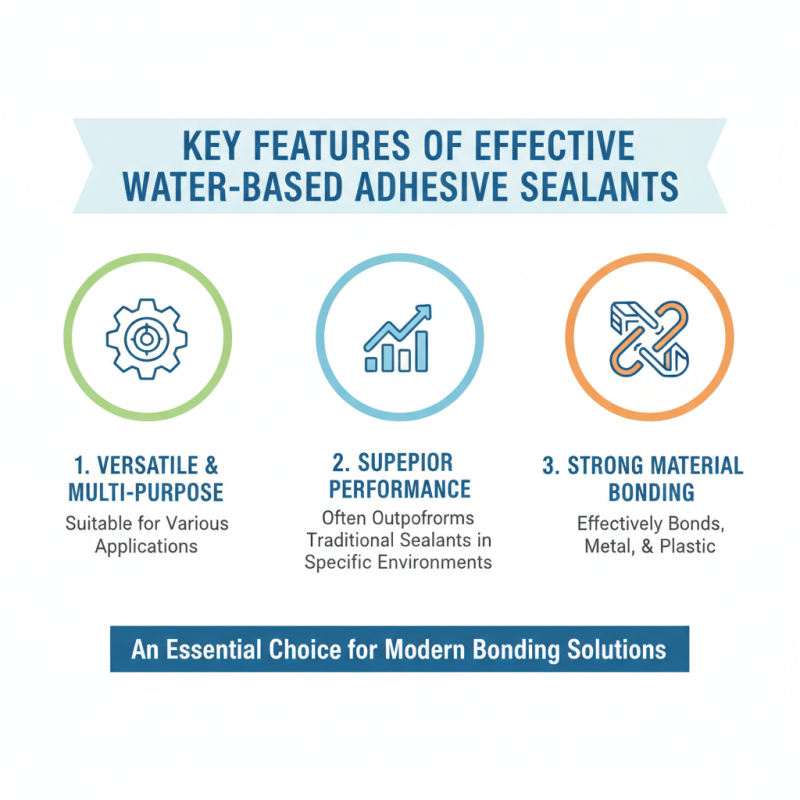
Key Features of Effective Water Based Adhesive Sealants
When choosing water-based adhesive sealants, it's essential to understand their key features. These sealants should be versatile and suitable for various applications. Many effective options outperform traditional sealants in specific environments. They can bond different materials, like wood, metal, and plastic.
One important feature is quick drying time. This allows for faster project completion, which is crucial in many settings. Another key characteristic is resistance to water and mold. A reliable sealant will withstand moisture without losing its efficacy. Additionally, look for sealants with low odor. This is particularly important for indoor projects.
Sometimes, users may find that not all sealants perform well in extreme temperatures. Experimentation may be needed to identify which products work best in specific conditions. Also, some may find it difficult to remove these sealants once cured. It's worth considering how removal will impact future repairs. Finally, always check for easy application options. A user-friendly product can save time and effort during your projects.
Top 10 Recommended Water Based Adhesive Sealants on the Market
When choosing water-based adhesive sealants for your projects, it's essential to consider performance and safety. According to a study published by the Adhesive and Sealant Council, the water-based adhesive market is projected to grow significantly, driven by environmental regulations. These products are praised for their low toxicity and easy cleanup, making them suitable for both professionals and DIY enthusiasts.
The best water-based sealants often feature impressive bonding strength while maintaining flexibility. Reports indicate that products in this category can exhibit bonding strengths exceeding 300 psi in certain applications. This means they can effectively seal a variety of materials, from wood to ceramics. However, users should be aware that not all products perform equally in extreme conditions. Testing for compatibility with specific substrates is crucial for optimal results.
In terms of application ease, water-based adhesive sealants generally offer a user-friendly experience. They can be applied with brushes, rollers, or by hand, allowing users flexibility. However, some formulations may have a short working time, demanding quick action from users. This aspect could lead to challenges if a project is rushed. Professional contractors often reflect on these variables, considering their own experiences with different products in the field.
Top 10 Recommended Water Based Adhesive Sealants
| Sealant Type |
Application |
Curing Time |
Temperature Resistance |
Water Resistance |
| Acrylic Sealant |
Indoor/Outdoor |
24 hours |
-20°F to 120°F |
Good |
| Silicone Sealant |
Bathroom/Kitchen |
24 hours |
-40°F to 100°F |
Excellent |
| Latex Sealant |
Indoor |
1-2 hours |
-20°F to 90°F |
Fair |
| Polyurethane Sealant |
Outdoor |
48 hours |
-40°F to 190°F |
Excellent |
| Construction Adhesive |
Heavy Duty |
24-48 hours |
-20°F to 120°F |
Good |
| Caulk |
Sealing Joints |
2-3 hours |
-20°F to 100°F |
Good |
| Ventilation Sealant |
Air Ducts |
12-24 hours |
-10°F to 125°F |
Fair |
| Plumbing Sealant |
Pipes & Fixtures |
24 hours |
-20°F to 150°F |
Excellent |
| Roofing Sealant |
Roof Leaks |
24-48 hours |
-40°F to 180°F |
Excellent |
| Glass Sealant |
Window & Glass |
24 hours |
-20°F to 120°F |
Good |
Applications of Water Based Adhesive Sealants in Various Projects
Water-based adhesive sealants have become essential in a variety of projects across multiple industries. These sealants are known for their eco-friendly properties and versatility. They are widely used in construction, automotive, and DIY projects. According to a recent report by MarketsandMarkets, the global water-based adhesive market is projected to reach USD 12 billion by 2025, highlighting the growing relevance of these materials.
In construction, water-based sealants offer excellent adhesion and flexibility. They are perfect for sealing joints, gaps, and even surfaces exposed to moisture. For instance, a study by the Adhesive and Sealant Council indicates that water-based products have a 30% higher performance in preventing leaks compared to traditional solvents. However, not all applications yield the same results. For homeowners, misapplication can lead to ineffective seals, causing issues in the long run. Testing the surface compatibility beforehand is often overlooked but crucial.
In the automotive sector, water-based sealants are used for windshields and body panels. They provide durability and resistance to temperature fluctuations. An analysis by the Society of Automotive Engineers stated that improper sealing could impact vehicle integrity and safety. It urges manufacturers to focus on proper training and guidelines for sealant application. Careful application must be emphasized to ensure that all benefits are realized. Water-based sealants play a significant role in both everyday tasks and complex industrial applications, emphasizing the importance of education and quality control.
Top 10 Water Based Adhesive Sealants for Your Projects
This chart showcases the performance ratings of the top 10 water-based adhesive sealants, providing insights into their effectiveness for various project applications.