Inquiry
Form loading...
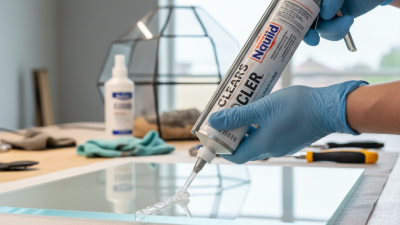
Clear Liquid Nails can be a practical choice for buyers seeking a transparent adhesive for interior repairs, trim, or craft applications. Its clear appearance may help preserve a neat finish where visible residue would distract. But the product name alone tells little. Performance depends on the formula, the surfaces being bonded, and the conditions of use. A clear bead is not automatically a strong bond.
Global sourcing makes those details more important. Buyers should compare technical data sheets, cure times, recommended substrates, storage limits, and packaging options. Ask suppliers for current product specifications and quality-control information. Check that labels and safety documents match the exact formulation being offered. Small differences matter. A carton designed for local retail may not protect tubes during a long, warm transit route.
Reliable sourcing also requires practical checks: sample testing, clear acceptance criteria, and communication about production schedules. Confirm that the adhesive suits the intended material before placing a large order. Wood, metal, and plastic can behave differently, and surface preparation may change results. Supplier certifications can be useful, but they do not replace product-level evaluation. That is easy to overlook.
This guide explores why Clear Liquid Nails may fit global procurement needs, what buyers should verify, and how to reduce avoidable uncertainty. No sourcing plan is perfect. Even careful teams can miss a detail, so keep records and review results after delivery.
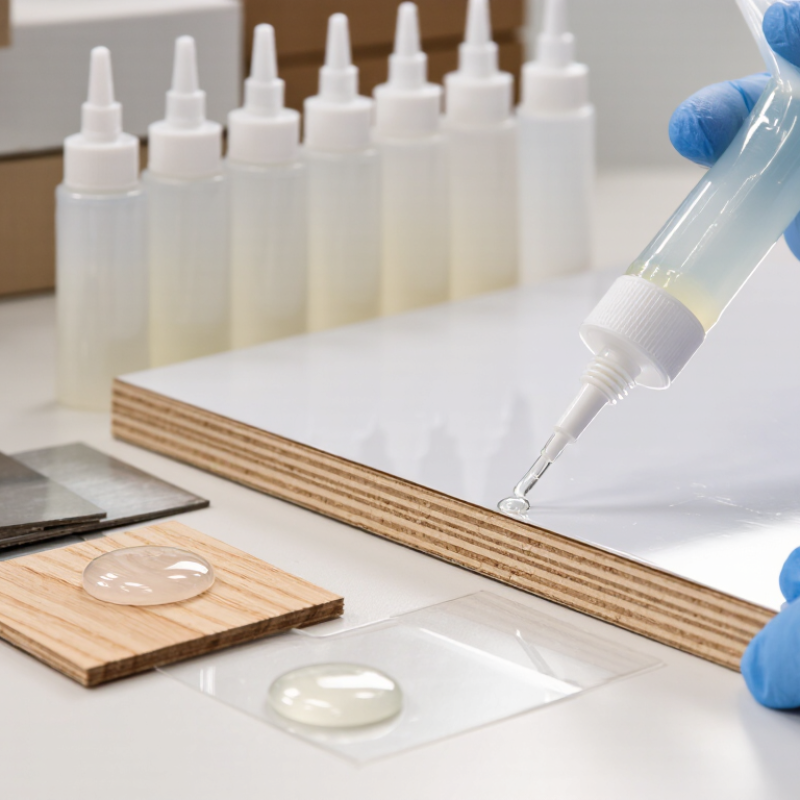
Clear liquid nails are transparent construction adhesives, not actual nails. Most formulas contain a polymer resin that creates a strong bond between suitable surfaces. Water or solvent may carry the resin while it is wet. As the carrier evaporates, the polymer forms a flexible adhesive layer. Some formulas also cure through moisture or chemical reactions. That distinction matters.
When applied, the wet adhesive spreads across tiny surface irregularities. This increases contact and supports mechanical grip. Polymer molecules also attract compatible surfaces at a microscopic level. Clean, dry, lightly roughened surfaces usually bond more reliably. Porous wood may absorb part of the adhesive. Metal, glass, and tile often need careful pressure and the correct curing time. Clamping helps. Clear does not mean invisible. Excess adhesive can collect dust, and some formulas may yellow under heat or sunlight.
For global sourcing, buyers should request a technical data sheet and safety data sheet. Check viscosity, open time, curing time, temperature range, and tested substrates. A retained sample can reveal separation, weak adhesion, or nozzle problems after storage. Packaging also deserves attention, especially seal quality and transport temperature. Water-based formulas may suffer from freezing. Solvent-based formulas may require stricter ventilation controls. Appearance alone is not enough. I would question any supplier offering one adhesive for every surface. A small, documented sample test often exposes assumptions before large-scale purchasing.
| Data Dimension | Typical Technical Data | Global Sourcing Relevance |
|---|---|---|
| Product definition | Clear liquid nails are transparent construction adhesives supplied as a paste, gel, or thick liquid for bonding common building and household materials. | The clear appearance supports less visible joints and can reduce the need for color-matched adhesive or extensive finishing work. |
| Common adhesive chemistries | Typical formulations include solvent-based synthetic rubber, water-based acrylic or latex, and moisture-curing hybrid or silane-modified polymers. | Chemistry affects VOC emissions, curing speed, moisture resistance, storage conditions, transport classification, and regulatory requirements. |
| How bonding works | The adhesive wets both surfaces, develops initial grab, and forms a polymer film or crosslinked network as water or solvent evaporates or moisture triggers curing. | A clear mechanism description helps buyers match the product with climate, substrate porosity, assembly time, and installation conditions. |
| Appearance | Transparent to slightly translucent when cured; the exact clarity may vary with film thickness, substrate color, and exposure to heat or ultraviolet light. | Request cured-film photographs and a visual acceptance standard because “clear” can mean different levels of transparency. |
| Typical substrates | Wood, concrete, masonry, ceramic, metal, glass, painted surfaces, and selected plastics, subject to formulation compatibility. | A sourcing specification should list approved and restricted substrates, especially plastics with low surface energy such as polyethylene and polypropylene. |
| Viscosity | Often approximately 20,000–150,000 mPa·s at 23°C, depending on chemistry and application method. | Higher viscosity improves gap filling and vertical hold, while lower viscosity can improve spreadability and dispensing speed. Confirm the test method before comparing suppliers. |
| Density | Commonly about 0.90–1.30 g/cm³ at 23°C, depending on solids, fillers, and solvent or water content. | Density affects net fill, shipping weight, packaging calculations, and cost per applied volume. |
| Open and working time | Many construction adhesives provide approximately 5–30 minutes of working time, although formulation and temperature can substantially change this range. | The correct working time reduces installation errors during international projects and supports consistent assembly-line takt times. |
| Initial grab | Initial grab ranges from low to high; some products require temporary support or mechanical fastening until sufficient strength develops. | Buyers should request a defined initial-grab test rather than relying only on marketing terms such as “instant hold.” |
| Curing time | Handling strength may develop within several hours, while full cure commonly requires 24–72 hours or longer for thick beads and low-permeability surfaces. | Cure time must be evaluated under the intended temperature, humidity, bead size, and substrate conditions. |
| Temperature resistance | Many cured construction adhesives operate within an approximate range of −20°C to 80°C; specialized formulations may provide wider limits. | Confirm both continuous and short-term temperature limits for outdoor, automotive-adjacent, kitchen, and bathroom applications. |
| Moisture resistance | Water resistance varies from limited indoor resistance to high resistance after cure. Continuous immersion performance is not universal. | Ask for immersion, humidity, and water-spray test data when sourcing for wet rooms, exterior assemblies, or humid regions. |
| VOC and odor profile | Water-based products generally have lower solvent odor; solvent-based products can have higher VOC emissions and may require ventilation. | Review the Safety Data Sheet and applicable regional VOC limits before importing or selling the product. |
| Gap-filling capability | Thixotropic construction adhesives can bridge minor surface irregularities, but large gaps may reduce strength and require backer material or mechanical support. | Define the maximum approved gap and bead geometry to make supplier samples comparable. |
| Packaging formats | Common formats include cartridges, squeeze tubes, pails, and foil packs; cartridge volumes often range from approximately 280– omitting? 310 mL depending on the market. | Packaging should match dispensing equipment, local retail conventions, pallet configuration, leakage controls, and recycling requirements. |
| Storage conditions | Many products are stored in a cool, dry place, commonly between 5°C and 25°C; freezing can damage water-based formulations. | Agree on shelf-life, temperature limits, container orientation, and first-in-first-out inventory procedures before shipment. |
| Shelf life | Typical unopened shelf life is approximately 12–24 months when stored under the manufacturer’s specified conditions. | Longer shelf life can reduce write-offs during ocean freight, customs clearance, warehousing, and seasonal demand changes. |
| Quality-control checks | Recommended checks include appearance, viscosity, density, solids content, skin formation, adhesion, cure time, packaging integrity, and batch consistency. | A documented inspection plan helps maintain consistent performance across production batches and international shipments. |
| Compliance documentation | Request a current Technical Data Sheet, Safety Data Sheet, ingredient or regulatory declaration where required, and packaging or transport classification. | Complete documentation supports customs processing, workplace safety, product registration, and market-specific labeling. |
| Best sourcing advantage | Clear construction adhesive can combine discreet appearance, broad material compatibility, gap tolerance, and convenient cartridge application. | The best global sourcing decision balances verified technical performance, regulatory fit, packaging efficiency, shelf life, logistics requirements, and total landed cost. |
Note: Technical ranges are representative industry values and vary by formulation, test method, substrate, climate, and application conditions. Final purchasing decisions should be based on the supplier’s current Technical Data Sheet and Safety Data Sheet.