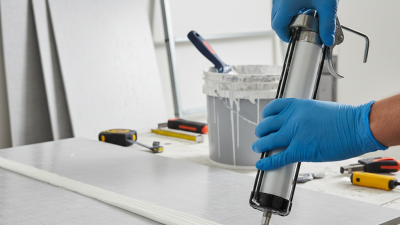
Global construction projects rarely fail because of one dramatic decision. More often, small movements, uneven substrates, and changing temperatures create hidden weaknesses. Low Shrinkage Liquid Nails can help reduce those risks when selected and applied correctly. Its reduced volume change supports more stable bonds during curing. This matters when materials include timber, metal, concrete, plasterboard, or composite panels.
Conditions vary widely.
A project in humid Singapore faces different challenges from one in a dry inland region. Transport time, storage temperature, surface cleanliness, and joint width can all influence performance. Experienced contractors therefore review technical data sheets before ordering large quantities. They also check curing times, recommended substrates, gap-filling limits, and compatibility with paints or sealants. Independent test reports and manufacturer quality systems provide stronger evidence than marketing claims alone.
No adhesive is universal.
Low Shrinkage Liquid Nails may improve dimensional stability, but it cannot correct poor surface preparation or unsuitable design. That assumption fails. Dust, oil, moisture, and weak surfaces can reduce adhesion, even with a reputable product. Trial applications on local materials are sensible, especially when specifications differ between countries. Project managers should also confirm packaging durability, batch traceability, and supplier support across borders. These practical checks create a more reliable selection process. Still, performance can vary between applications, and field results deserve honest review. A careful specification balances laboratory data with real site conditions, installation skill, and long-term maintenance needs.
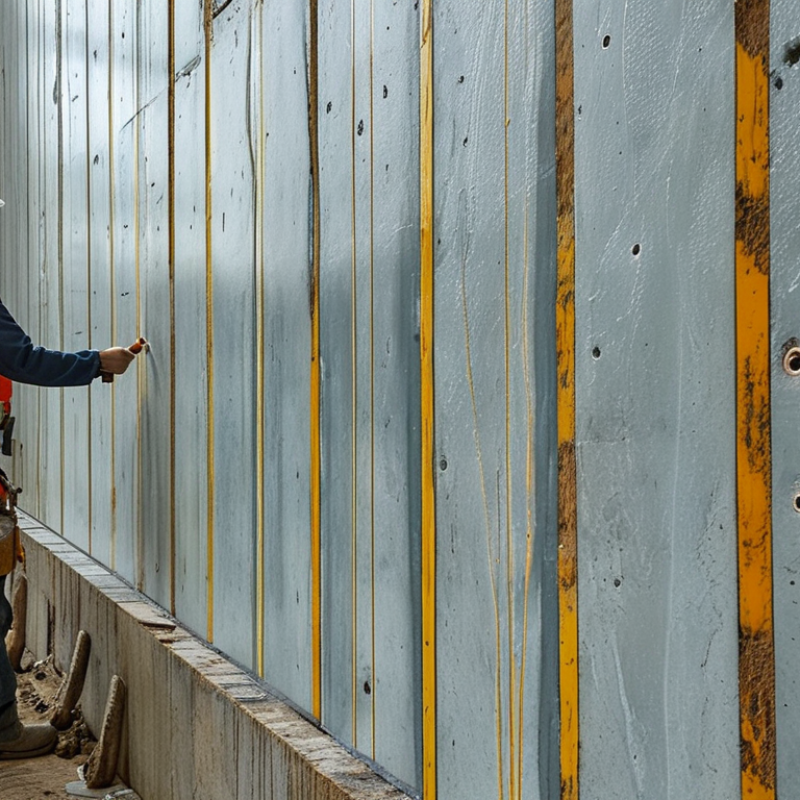
For global construction projects, adhesive choice is often treated as a small detail. It is not. Low-shrinkage liquid nails can reduce stress as a bond cures. The key measurement is volume loss. A formulation rated at ≤2% loses no more than two percent of its original volume under stated test conditions. That limit matters because a shrinking bead may pull away from one surface, especially across uneven panels or narrow gaps. A stable bead keeps more contact, supports load transfer, and reduces movement during curing. In practice, joint stability also depends on substrate porosity, temperature, moisture, bead size, and curing time.
Tips: Clean dust and grease first. Use consistent bead thickness. Support heavy parts during cure. Record temperature and humidity. Test the adhesive on actual project surfaces before approval. Small records prevent large arguments later.
Do not assume ≤2% means zero movement. That would be an easy mistake. A site mock-up can reveal edge gaps, weak adhesion, or slow curing after temperature cycling. Technical teams should review test data, installation instructions, compatibility results, and applicable regional requirements. Low shrinkage is valuable for prefabricated interiors, transport equipment, and remote facilities where repairs are difficult. Still, workmanship can defeat good chemistry. An overfilled joint, damp surface, or premature load may cause failure. Choose documented performance, then validate it in the real assembly. Performance should be measured, not merely promised.
Why Choose Low Shrinkage Liquid Nails for Global Projects?
VOC performance changes the adhesive choice. MS polymer formulations usually cure without added solvent, so their VOC levels can be very low. PU adhesives can also perform well, but formulations vary widely. Some contain reactive ingredients that require careful handling before curing. Solvent-based adhesives may release substantial VOCs during application and drying. Indoor air quality becomes a real concern.
The U.S. Environmental Protection Agency identifies building materials as important indoor VOC sources. California’s South Coast Air Quality Management District limits many construction adhesives to 70 g/L VOC, under Rule 1168. This figure is useful, but it does not describe every product or market. European indoor-air assessments also stress testing finished materials, not relying only on raw-material claims. Check the safety data sheet and independent chamber results.
Low shrinkage matters beyond emissions. A bead that contracts less can maintain contact around metal panels, concrete joints, and uneven substrates. That reduces rework across different climates. MS polymer often offers a practical balance between low VOC emissions and flexible curing. PU may provide strong adhesion, yet moisture and storage conditions deserve attention. Solvent-based products can still suit certain surfaces, but ventilation becomes essential. I have seen “low VOC” claims create confusion. They are not automatically zero-emission claims. Global teams should compare VOC units, test methods, curing time, and local limits before approval. Lofty claims need measured evidence.
| Evaluation Dimension | MS Polymer Adhesive | PU Adhesive | Solvent-Based Adhesive |
|---|---|---|---|
| Typical VOC Level | Usually <50 g/L; many solvent-free grades are very low VOC | Typically <50 g/L for solvent-free grades; solvent-containing grades may be higher | Typically about 300–600 g/L, depending on solvent package and formulation |
| Primary Curing Mechanism | Cures by reacting with atmospheric moisture | Reacts with atmospheric moisture; some grades require additional moisture for reliable curing | Dries mainly through evaporation of organic solvents |
| Typical Volumetric Shrinkage | Usually below 2% | Approximately 1–5%; varies with moisture, formulation, and foaming behavior | Approximately 5–15% because solvent evaporation reduces volume |
| Dimensional Stability | Excellent; maintains bond-line volume well during curing | Good to very good; may expand slightly in moisture-rich conditions | Moderate; bond-line contraction can be noticeable on porous or uneven surfaces |
| Initial Tack | Moderate to high; often suitable for vertical installation | Moderate; may require temporary support depending on load and substrate | High initial grab in many formulations |
| Full Cure Time | Approximately 24–72 hours, depending on temperature, humidity, and joint thickness | Approximately 24–72 hours; thicker joints and low humidity can extend curing | Approximately 24–72 hours, with drying speed strongly affected by ventilation and joint thickness |
| Temperature Resistance After Cure | Commonly about −40°C to +90°C; some grades tolerate higher temperatures | Commonly about −30°C to +90°C; specialized grades may tolerate higher temperatures | Commonly about −20°C to +80°C; performance depends strongly on polymer and solvent system |
| Water and Weather Resistance | Generally excellent; suitable for many interior and exterior applications | Generally excellent after cure; verify resistance to prolonged water exposure | Good to very good, but long-term performance can vary with solvent and polymer chemistry |
| Flexibility After Cure | High flexibility with good movement accommodation | Good flexibility, combined with high mechanical strength | Low to moderate flexibility; may become more brittle as the adhesive ages |
| Substrate Compatibility | Works with many porous and non-porous substrates, including metal, glass, wood, masonry, and plastics | Strong adhesion to wood, masonry, concrete, and many metals; test plastics and sensitive surfaces | Good adhesion to many common building materials; solvents may attack plastics, coatings, foam, or painted surfaces |
| Paintability | Generally paintable after skin formation or full cure; perform a compatibility test | Generally paintable after cure; some formulations may affect water-based coatings | Paintability varies; residual solvent can cause blistering, softening, or drying problems |
| Application Odor | Low odor in solvent-free formulations | Low odor in solvent-free formulations; isocyanate-containing products require safety controls | Strong odor is common because of volatile organic solvents |
| Indoor Air Quality Considerations | Generally favorable when certified low-VOC and used with adequate ventilation | Favorable for solvent-free products, but uncured materials require careful handling and ventilation | Higher potential for indoor VOC emissions during application and drying |
| Cold-Climate Performance | Good after cure; application below the recommended temperature can slow curing | Good after cure; low humidity and cold temperatures can significantly slow curing | Often usable at lower temperatures, but evaporation and final strength may be affected |
| Global Regulatory Suitability | Often easier to adapt to low-VOC building standards and indoor-air requirements | Can meet low-VOC requirements when solvent-free; occupational controls may apply to reactive components | May face stricter transport, labeling, workplace exposure, and VOC restrictions |
| Best Fit for Global Projects | Projects prioritizing low emissions, low shrinkage, flexibility, and broad substrate compatibility | Projects requiring strong structural bonding, moisture resistance, and high mechanical performance | Projects prioritizing fast grab, strong solvent-based adhesion, or use in conditions where moisture cure is limited |
Why Choose Low Shrinkage Liquid Nails for Global Projects?
ASTM D1002/D1002M measures apparent shear strength in MPa using a single-lap joint. The test applies force parallel to the bonded surface. Engineers calculate strength by dividing maximum load by bonded area. A stronger result often supports thinner joints and lighter assemblies. However, MPa values are not universal product ratings. Substrate, overlap length, bondline thickness, curing time, and test speed can change the result significantly. ASTM International defines the method, but it does not establish one pass-or-fail value for every project. A neat number can mislead.
Low shrinkage matters when temperatures and humidity vary across regions. Excessive contraction can stress edges, create gaps, or reduce contact with porous materials. The 2023 Global Status Report for Buildings and Construction reports that buildings consume about 34% of global energy and generate approximately 37% of energy-related emissions. Durable adhesive joints can support longer service life, but durability still requires evidence. Compare dry, wet, and thermal-aged ASTM D1002 results. One weakness remains: many laboratory results do not represent dusty sites or uneven surfaces.
Tips: Record MPa values beside temperature, humidity, cure time, and failure mode. Test at least five specimens per condition. Report the average and the lowest result. Check whether failure occurred within the adhesive or at the substrate. For global specifications, request testing in metric units and verify local substrate compatibility. A low-shrinkage formula may improve dimensional stability, yet field trials should challenge the assumption. The best data is sometimes uncomfortable.
ASTM D1002 apparent lap-shear strength under different environmental conditioning conditions
The chart presents a representative, non-brand test dataset for a low-shrinkage liquid nail adhesive. Strength is reported in MPa and is calculated from the peak load divided by the bonded lap area. The results illustrate how temperature, moisture, and freeze–thaw exposure can influence bond performance. Actual ASTM D1002 results depend on adhesive formulation, substrate preparation, overlap geometry, curing time, and laboratory conditions.
Low shrinkage matters when assemblies cross climates, materials, and installation teams. A small gap can become a visible failure after curing. Timber, metal, concrete, and painted panels rarely move at the same rate. Low shrinkage helps the adhesive maintain contact instead of pulling away from the substrate. It also reduces stress around edges, joints, and fastener points.
EN 204 D3 and D4 are important references for wood bonding. D3 suits interior areas with frequent moisture and limited exterior exposure. D4 addresses stronger water resistance, including demanding exterior conditions. These classifications apply to tested adhesive and wood assemblies, not every construction joint. Always check the complete technical report. A liquid adhesive should not claim D4 performance without relevant evidence.
ISO 11600 focuses on sealant movement capability. Classes such as 12.5, 20, and 25 indicate different movement allowances. A class 25 sealant, for example, is designed for movement up to 25 percent under defined conditions. Adhesive strength alone cannot replace elastic joint design. This is where project teams sometimes misjudge the product. Low shrinkage supports dimensional stability, but it does not eliminate movement. Joint width, backing material, surface preparation, and curing temperature still matter. On one cold, dusty site, even a technically suitable adhesive performed poorly because the concrete was not properly prepared. Small details decide large outcomes.
Global construction rarely provides stable temperatures. Exterior panels may face −20°C nights, then 80°C sun-heated surfaces. These swings create expansion and contraction at every joint. Low-shrinkage liquid nails help reduce added stress as the adhesive cures. A stable bond matters when different materials move at different rates. In field work, I have seen rigid products pull edges away after hot-cold cycles. The failure often begins as a hairline gap. Small gaps become water paths.
Designing for ±25% joint movement requires more than choosing a flexible label. The movement rating should match the joint width, expected shift, and substrate geometry. A 10 mm joint may need to accommodate 2.5 mm movement in either direction. Confirm this interpretation with tested technical data. Check adhesion to concrete, metal, coated surfaces, and damp-prone substrates. Clean, dry surfaces remain essential. Use temporary supports where panels could sag before curing. Cure speed changes with temperature and humidity. Cold conditions can extend handling time significantly. Plan around that delay.
A practical installation includes test patches, measured joint widths, and inspection after thermal cycling. Record batch details and curing conditions. This supports traceability across international sites. Yet specifications can mislead when workmanship is inconsistent. I have sometimes trusted a neat bead too quickly. That was a mistake. The bead may look continuous while hiding poor contact underneath. Apply consistent pressure, control bead size, and allow movement instead of blocking it with rigid fasteners. For critical assemblies, independent laboratory testing and local engineering review improve confidence. Not every project needs the same formulation. Climate, transport vibration, and maintenance access still deserve attention.